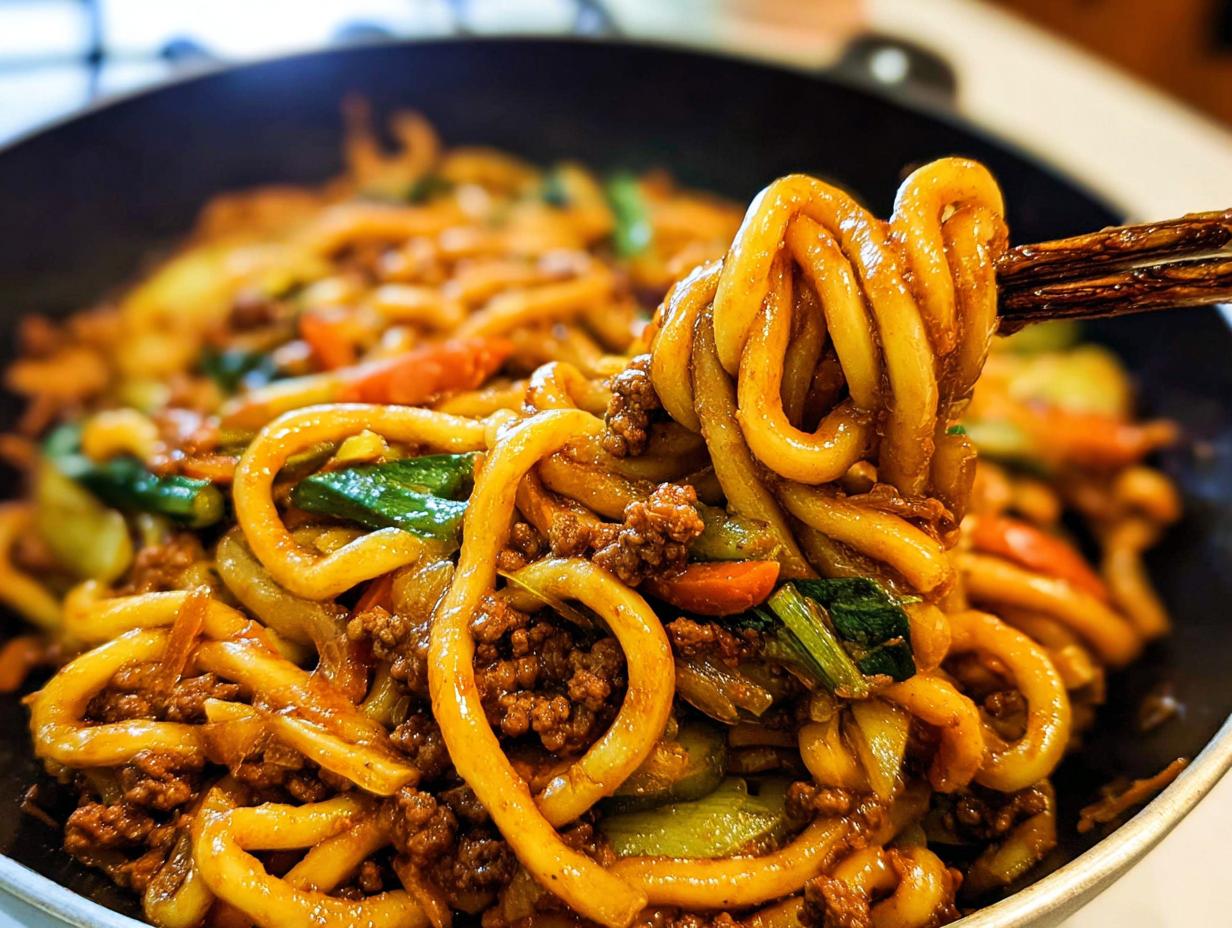
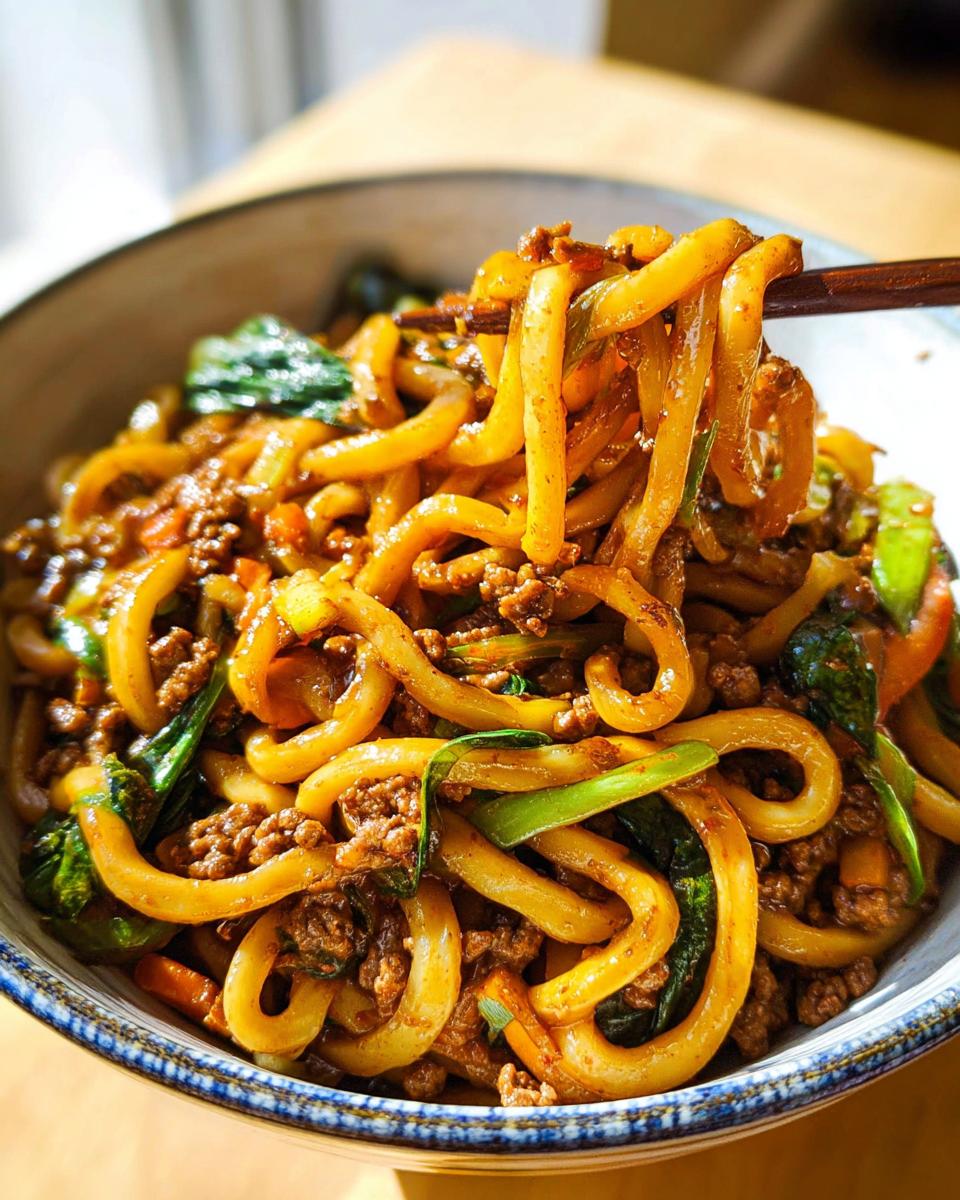
Oh, you’ve *got* to try making yaki udon at home! There’s something so magical about those thick, chewy noodles absorbing all those incredible Korean-inspired flavors. I remember the very first time I stumbled upon a bustling market stall in Japan, and the smell… wow! It was this incredible mix of sizzling noodles, savory sauces, and crisp veggies that just pulled me in. I watched the chef work their magic, and I knew I had to recreate that deliciousness back home. So, I gathered my family for a little kitchen adventure, and we whipped up this Irresistible Yaki Udon Noodle Recipe. Honestly, it was such a fun night, and every bite took us back to that vibrant market. It’s amazing how food can connect us, right? This recipe is quick, super satisfying, and so easy to make your own!
Why You’ll Love This Irresistible Yaki Udon Noodle Recipe
Seriously, who doesn’t love a meal that’s crazy fast *and* tastes incredible? This recipe is a total lifesaver for busy weeknights when you want something delicious without spending hours in the kitchen. Plus, it’s super forgiving, so you can totally play around with the ingredients to make it exactly how you like it. Get ready for some seriously satisfying noodle magic!
Gather Your Ingredients for Irresistible Yaki Udon
Alright, let’s get our delicious yaki udon ingredients together! You’ll want to grab a few things to make the most amazing sauce and get everything prepped for that quick stir-fry. Trust me, having everything ready to go makes the cooking process a total breeze. Think of it like setting up your own little udon station!
First up, the sauce! This is where all that savory goodness comes from. You’ll need: dark soy sauce (or regular soy sauce if that’s what you have on hand), some yummy oyster sauce (hoisin sauce or teriyaki sauce work too if you need a swap!), a splash of mirin for that authentic touch (cooking wine, sake, or even a bit of stock with lemon juice will do in a pinch), a touch of brown sugar to balance it all out, and a tiny bit of rice wine vinegar for a bright pop. Mix these all up in a small bowl; it’s seriously that simple!
Now for the stir-fry part! The star here is obviously the udon noodles. I love using the vacuum-packed ones because they’re perfectly chewy and usually come in about 13 oz total for two packets. Then, grab about 2.5 cups of your favorite stir-fry vegetables. I’m a big fan of mushrooms and bok choy, maybe throw in some onion too! You’ll also want a couple of scallions, cut into those nice 2-inch lengths for garnish and flavor. And for the protein, about half a pound of ground meat – beef, chicken, pork, turkey, or even shrimp would be fantastic. Finish it off with a tablespoon of avocado oil for frying. Easy peasy!
Step-by-Step Guide to Making Yaki Udon Noodles
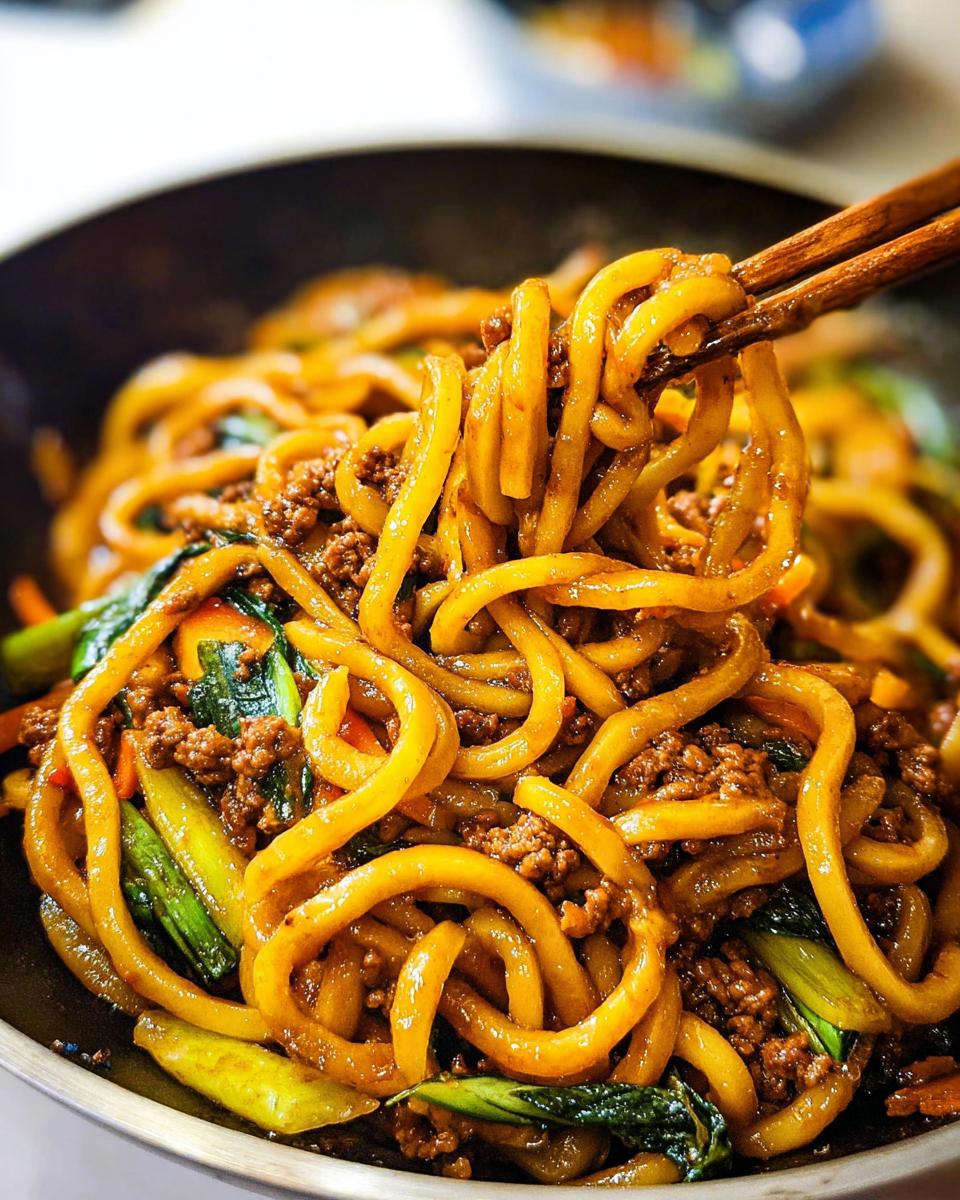
Alright, get your pans ready, because we’re about to whip up some seriously delicious Yaki Udon! It all comes together super fast, which is totally my favorite part. Just follow these easy steps, and you’ll be slurping up noodles in no time!
Prepare the Yaki Udon Sauce
First things first, let’s get that amazing sauce mixed up. Grab a little bowl and toss in your dark soy sauce, oyster sauce, mirin, brown sugar, and rice wine vinegar. Give it a good whisk until it’s all combined. That’s it! Set that beauty aside, and we’ll be ready to go.
Cook and Prepare the Udon Noodles
Now for the star of the show: the udon noodles! Take them out of their package – if they’re frozen, just drop them right in. Pop them into a pot of boiling water for just a minute or two, stirring gently. You want them to separate and be pliable, not mushy! Overcooking is the enemy here. Once they’re ready, drain them and give them a quick rinse under cold water. If you’re not stir-frying them right away, a tiny drizzle of oil will stop them from sticking together.
Stir-Fry the Meat and Vegetables
Time to heat things up! Get your pan nice and hot over high heat, then add that avocado oil. Toss in your ground meat (or shrimp, or whatever protein you picked!) and get it cooking and lightly browned. Once the meat is almost done, throw in your chopped veggies. Keep stirring them around until the meat is fully cooked and the vegetables are tender but still have a little bite. We don’t want soggy veggies!
Combine and Finish the Yaki Udon
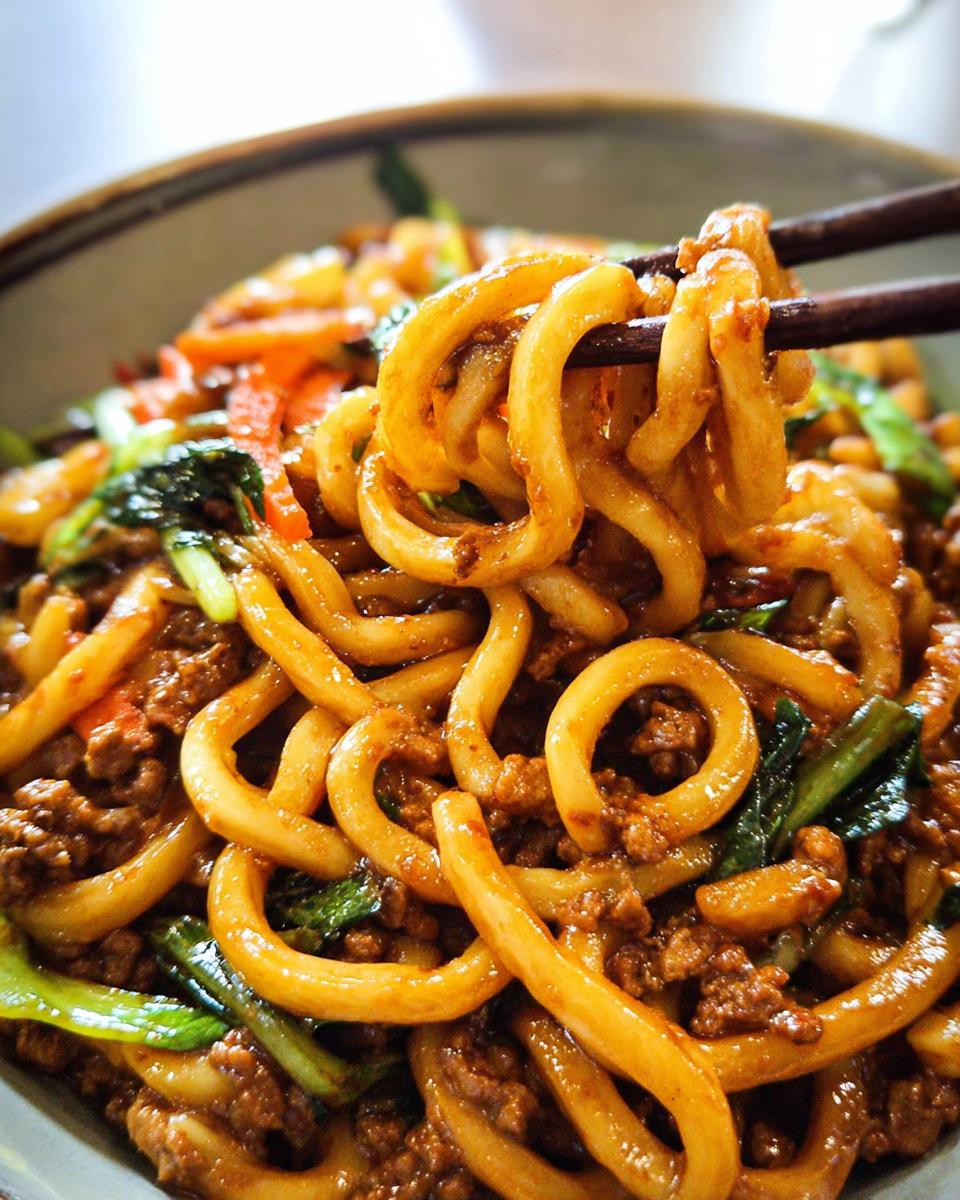
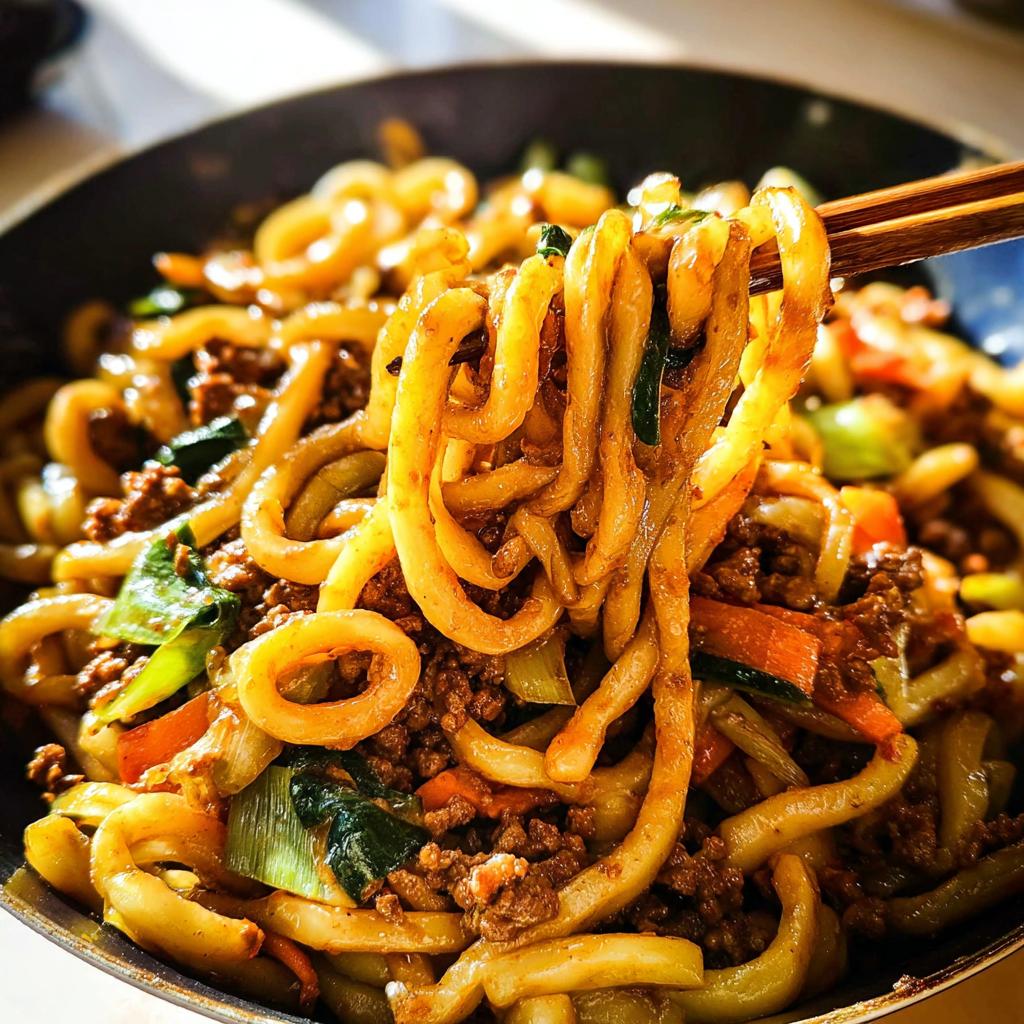
Okay, this is where the magic happens! Add the prepared udon noodles, all that glorious sauce we mixed earlier, and the scallions to the pan with the meat and veggies. Stir-fry everything together for about 3 minutes. You want to make sure those noodles get coated in the sauce and everything is heated through. If it smells as amazing as I think it does, it’s pretty much ready! You can find more tips on making this dish at drivemehungry.com.
Tips for Perfect Yaki Udon
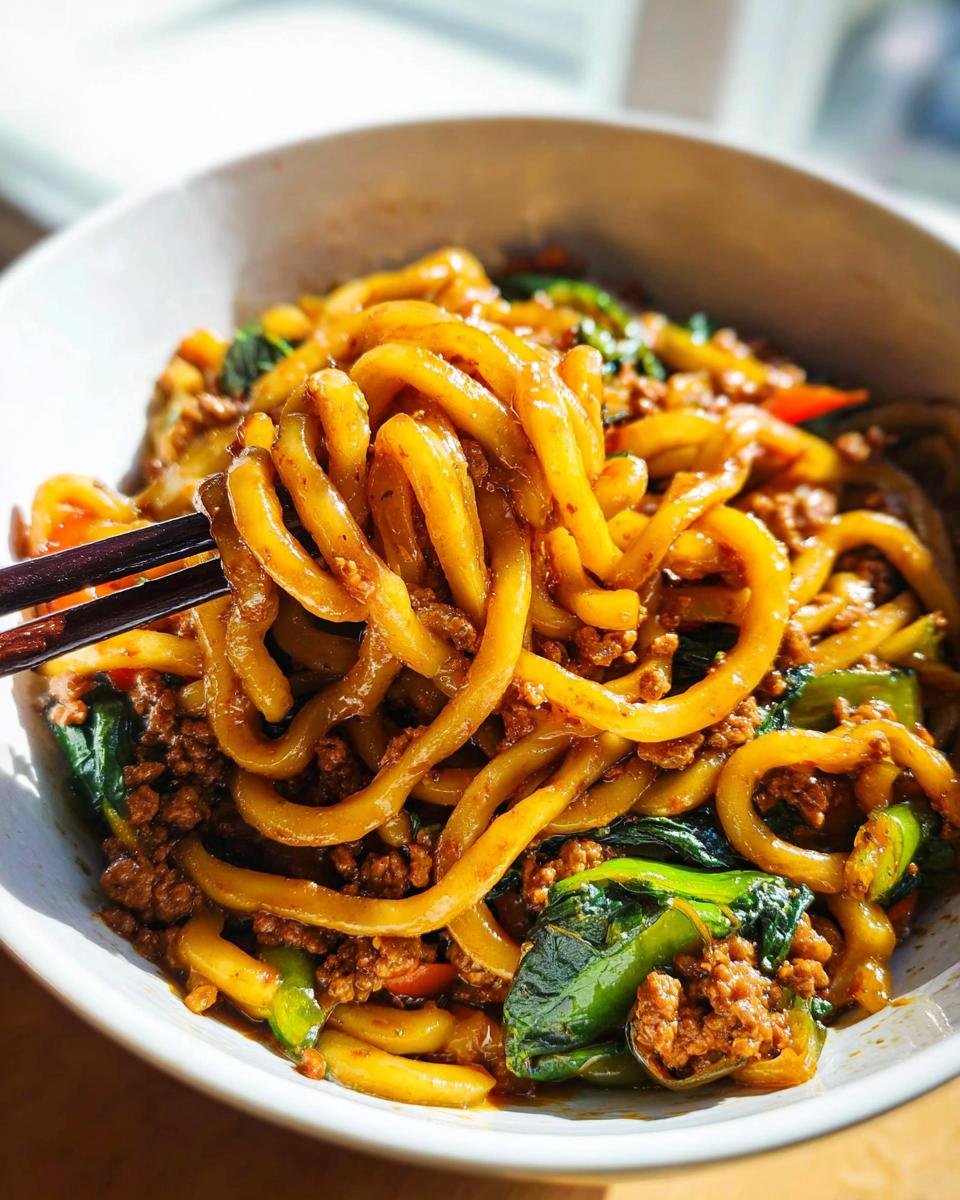
Okay, so you’ve got the recipe, and that’s awesome! But to really nail that perfect plate of yaki udon every single time, here are a few little secrets I’ve picked up along the way. It’s all about those tiny details that make a dish go from good to absolutely unforgettable!
First off, don’t shy away from high heat! When you’re stir-frying, that high heat is your best friend for getting that lovely little char on your veggies and keeping the noodles from getting gummy. Just make sure everything is prepped and ready to go because it cooks super fast. Also, if you’re looking for that authentic chewy texture in your udon, definitely try to find vacuum-packed or frozen ones – they really hold up much better than the canned kind. Check out more ideas for tasty noodle dishes at lowcarbrecipejournal.com!
Ingredient Substitutions and Variations
The best part about this recipe is how darn flexible it is! Don’t have exactly what the recipe calls for? No worries, we can totally work with it. If you can’t find oyster sauce, go ahead and use hoisin or even teriyaki sauce – they’ll give you that deep, savory flavor. And if mirin isn’t in your pantry, a little cooking wine, sake, or even just some stock with a tiny splash of lemon juice will do the trick in a pinch. We gotta make it work, right?!
For the veggies, seriously, use what you love or what’s in your fridge. Mushrooms, snow peas, bell peppers, broccoli florets, bean sprouts – they all work beautifully. And if you’re not feeling the ground meat, sliced chicken, pork, beef, or even some cooked tofu or shrimp are fantastic protein swaps. It’s all about making this dish perfectly *yours*! You can find more fun ideas for noodle dishes over at lowcarbrecipejournal.com!
Frequently Asked Questions About Yaki Udon
Got questions about whipping up this amazing noodle dish? I totally get it! It’s always good to have a little extra info. Here are some things people often ask:
What kind of udon noodles are best for yaki udon?
For yaki udon, you really want those thick, chewy noodles! The vacuum-packed or frozen udon noodles are usually your best bet. They have the perfect texture that holds up so well to stir-frying and soaking up all that delicious sauce. The dried ones can work, but they might get a bit mushy if you’re not careful.
Can I make this yaki udon recipe vegetarian or vegan?
Absolutely! This recipe is super adaptable. For a vegetarian version, just skip the meat and maybe add some extra veggies or some pan-fried tofu or tempeh. If you want to go vegan, make sure your oyster sauce replacement is vegan-friendly (some are just mushroom-based!) and swap out any other animal products. Easy peasy!
How do I store leftover yaki udon?
Leftovers are great for a quick lunch the next day! Just pop any extra yaki udon into an airtight container and pop it in the fridge. It should stay good for about 2 to 3 days. Honestly, it never lasts that long in my house, but that’s the general rule!
Can I make the sauce ahead of time?
Yes, you totally can! The sauce is actually perfect for making ahead. Just mix up all the sauce ingredients in a small bowl, cover it, and keep it in the fridge until you’re ready to cook. It’ll save you even more time when dinnertime rolls around. You can find more tips for speedy meals at lowcarbrecipejournal.com!
Storage and Reheating Instructions
Got lucky and have some leftovers? Awesome! Just pop any extra yaki udon into a good airtight container and zip it into the fridge. It’ll be delicious for about 2 to 3 days. When you’re ready for round two, a quick reheat is usually all it takes to bring back that yummy goodness!
Estimated Nutritional Information
Just a heads-up, the nutrition info for this Irresistible Yaki Udon Noodle Recipe is just an estimate to give you a general idea. Things can change a bit depending on the exact veggies and protein you use, and how much sauce you decide to add! But generally, for one serving, expect around 344 calories, 12g carbs, 22g protein, and 23g fat.
Share Your Yaki Udon Creations!
I’d absolutely LOVE to see your take on this Irresistible Yaki Udon Noodle Recipe! Did you try a fun veggie combo? Maybe a different protein? Leave a comment below and tell me all about it – I’m always looking for new ideas! And if you snap a pic, tag me on social media; I can’t wait to see your delicious creations grace my feed! You can learn more about me and my kitchen adventures over at lowcarbrecipejournal.com!
Irresistible Yaki Udon Noodle Recipe
Ingredients
Equipment
Method
- In a small bowl, mix all the ingredients for the Yaki Udon Noodle Sauce: dark soy sauce, oyster sauce, mirin, brown sugar, and rice wine vinegar. Set aside.
- Remove udon noodles from their package. Add them to a pot of boiling water. If using frozen udon, add them directly. Stir gently for 1-2 minutes until separated and pliable. Avoid overcooking.
- Rinse and drain the cooked udon noodles under cold water. If not using immediately, drizzle with a little oil to prevent sticking.
- Heat a pan over high heat and add the avocado oil. Add the ground meat and stir fry until almost cooked. Add the stir fry vegetables and continue to cook until the meat is fully cooked and the vegetables are soft.
- Add the prepared udon noodles, the sauce, and the scallions to the pan. Stir fry for about 3 minutes, or until everything is well combined. Add less sauce if you prefer a milder flavor. Serve immediately.
Nutrition
Notes
Tried this recipe?
Let us know how it was!
Maya Patel, Community Manager & Adaptation Specialist
I’ve spent the past five years working in community-focused nutrition, passionate about making low-carb eating accessible to everyone regardless of cultural background. With certification in cross-cultural nutrition counseling, I help people adapt healthy eating approaches while preserving their cherished food traditions.
My journey began as a community outreach coordinator when I noticed how nutrition advice often ignored people’s cultural food practices. This frustrated me—why should someone abandon their grandmother’s recipes to be healthy? I started developing ways to adapt traditional dishes from different cultures to fit therapeutic nutrition goals, helping hundreds of families integrate low-carb principles without losing their culinary heritage.
As a second-generation Indian-American, this is deeply personal. I’ve balanced my family’s food traditions with modern nutrition research, especially when adopting a low-carb approach to manage my PCOS. That experience taught me that sustainable health changes must honor who you are and where you come from.
My “inclusive wellness” philosophy is straightforward: there’s no one-size-fits-all approach to healthy eating. Whether developing vegetarian keto adaptations for traditional Indian flavors or creating community spaces for sharing cultural recipe modifications, I believe everyone deserves respect and support in their wellness journey.
When I’m not facilitating online discussions or testing cultural adaptations in my Portland kitchen, I work with clay in my pottery studio or volunteer with local community gardens. I believe growing food together strengthens both community bonds and our connection to nourishing ingredients.
At Low Carb Recipe Journal, I ensure our community remains welcoming for readers from all backgrounds while developing practical ways to adapt recipes for different cultural preferences and dietary needs. My goal is making low-carb eating culturally celebratory, not restrictive.