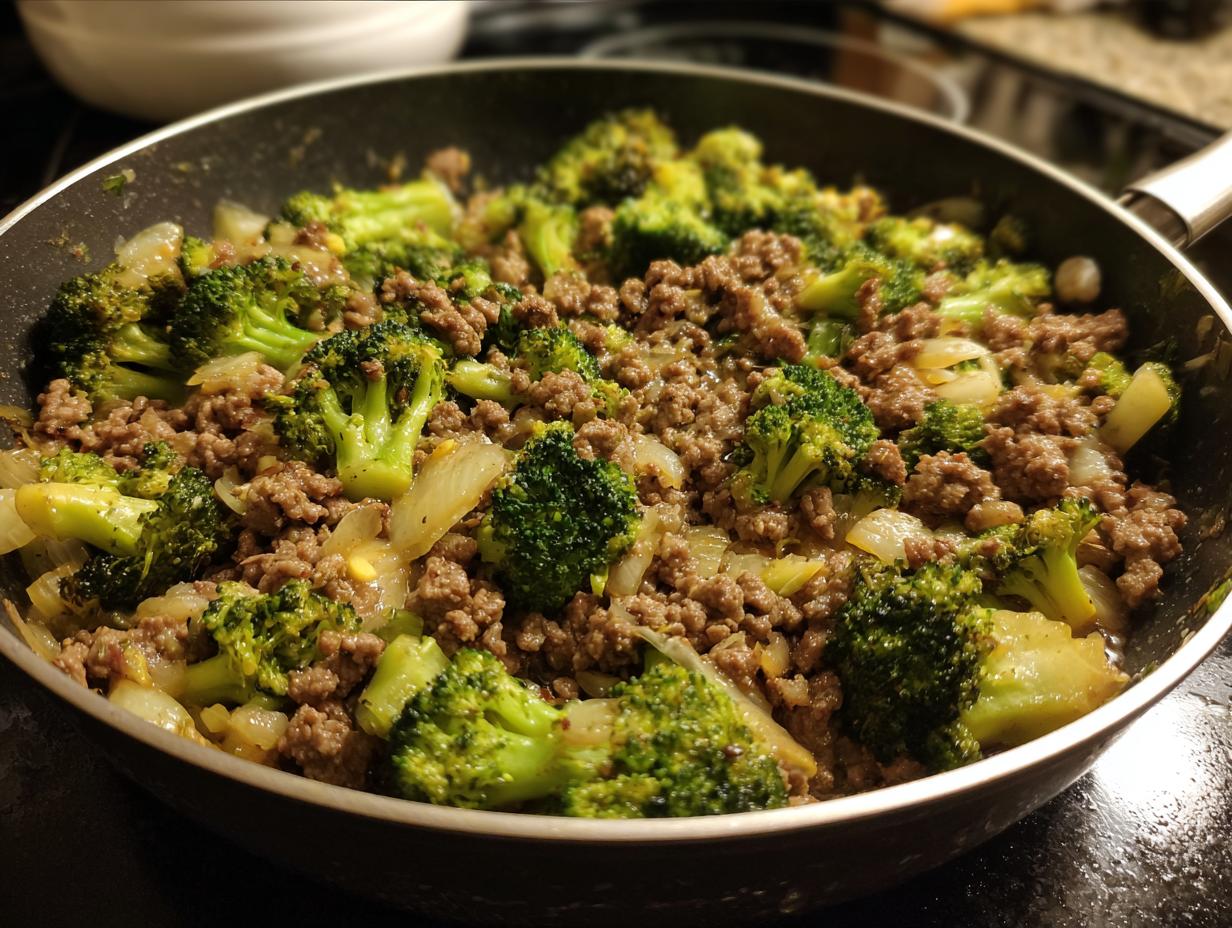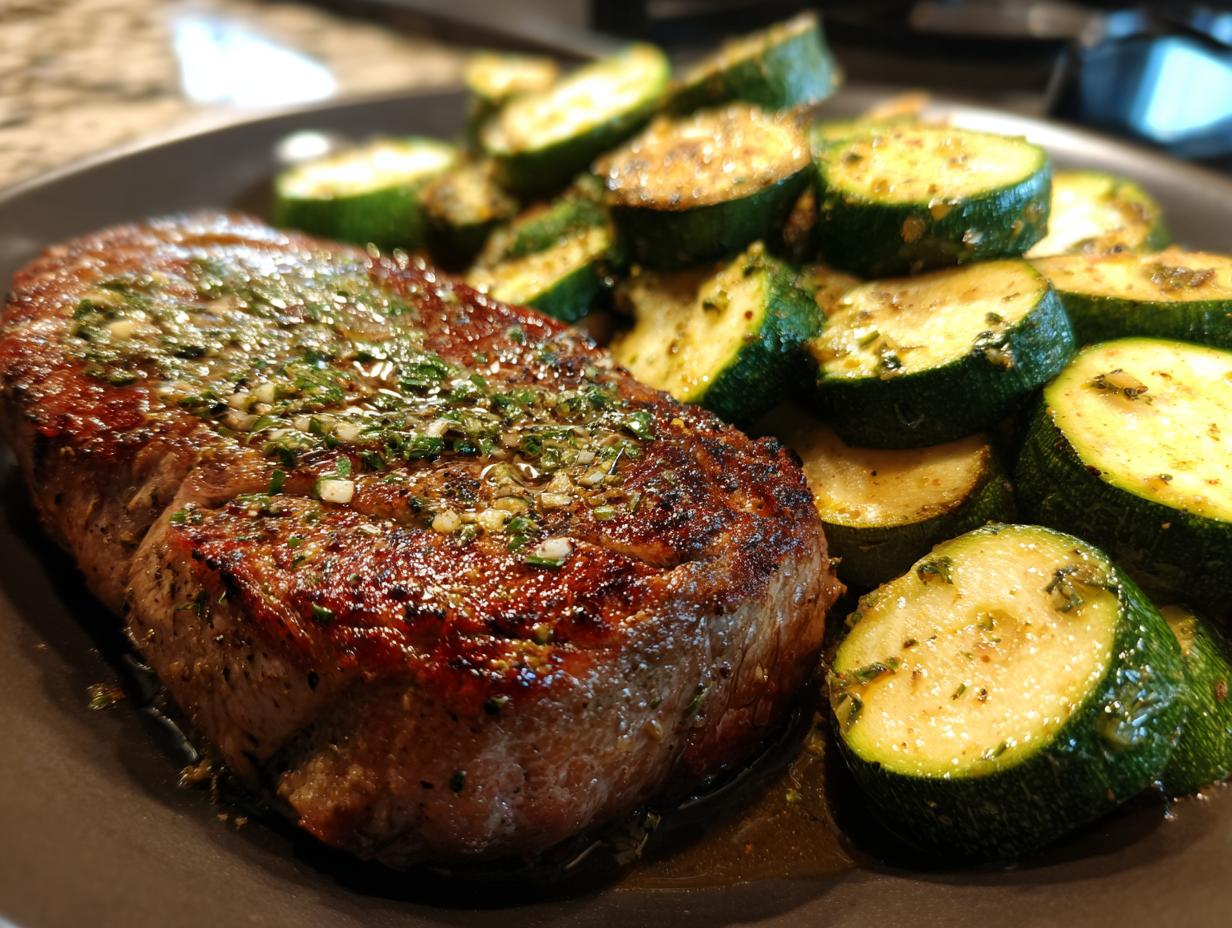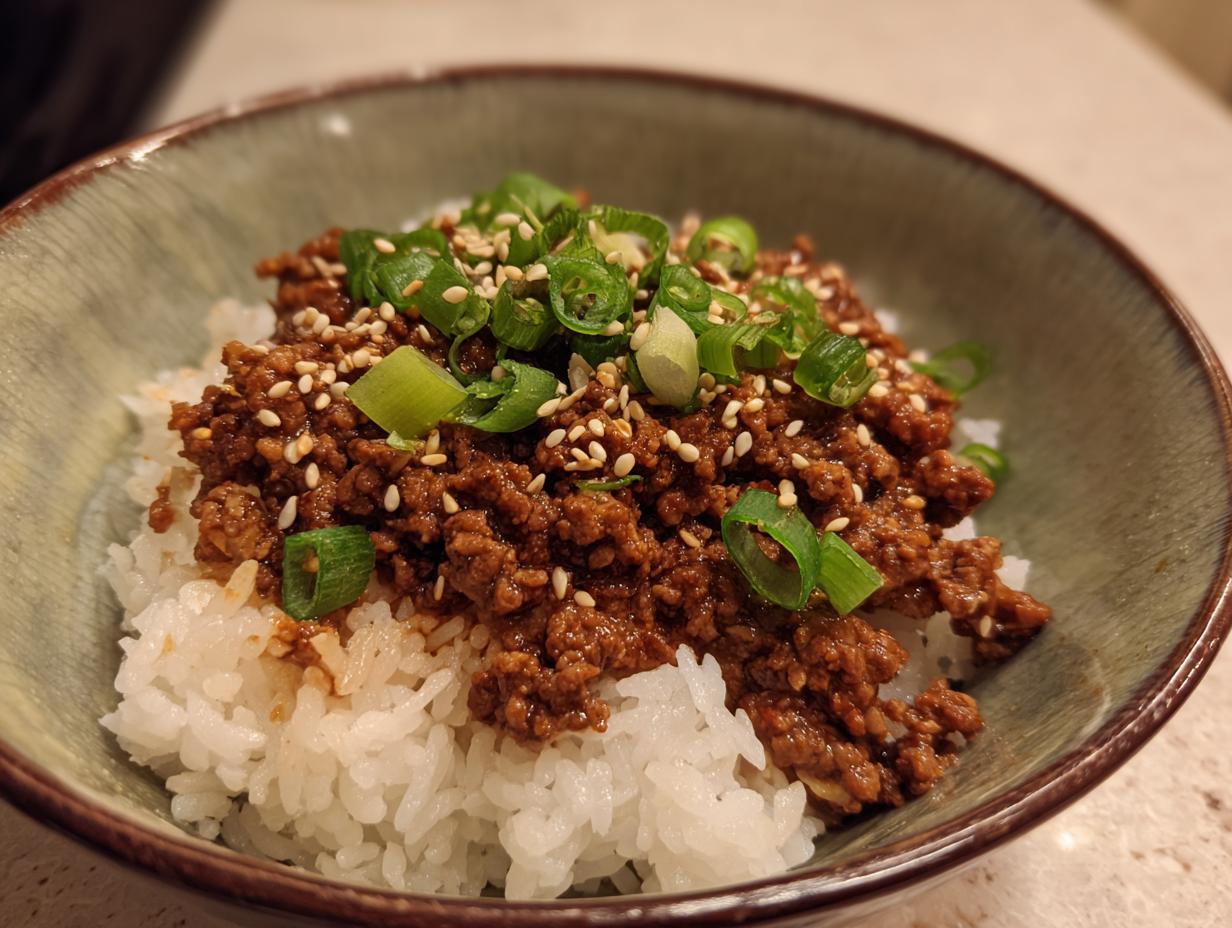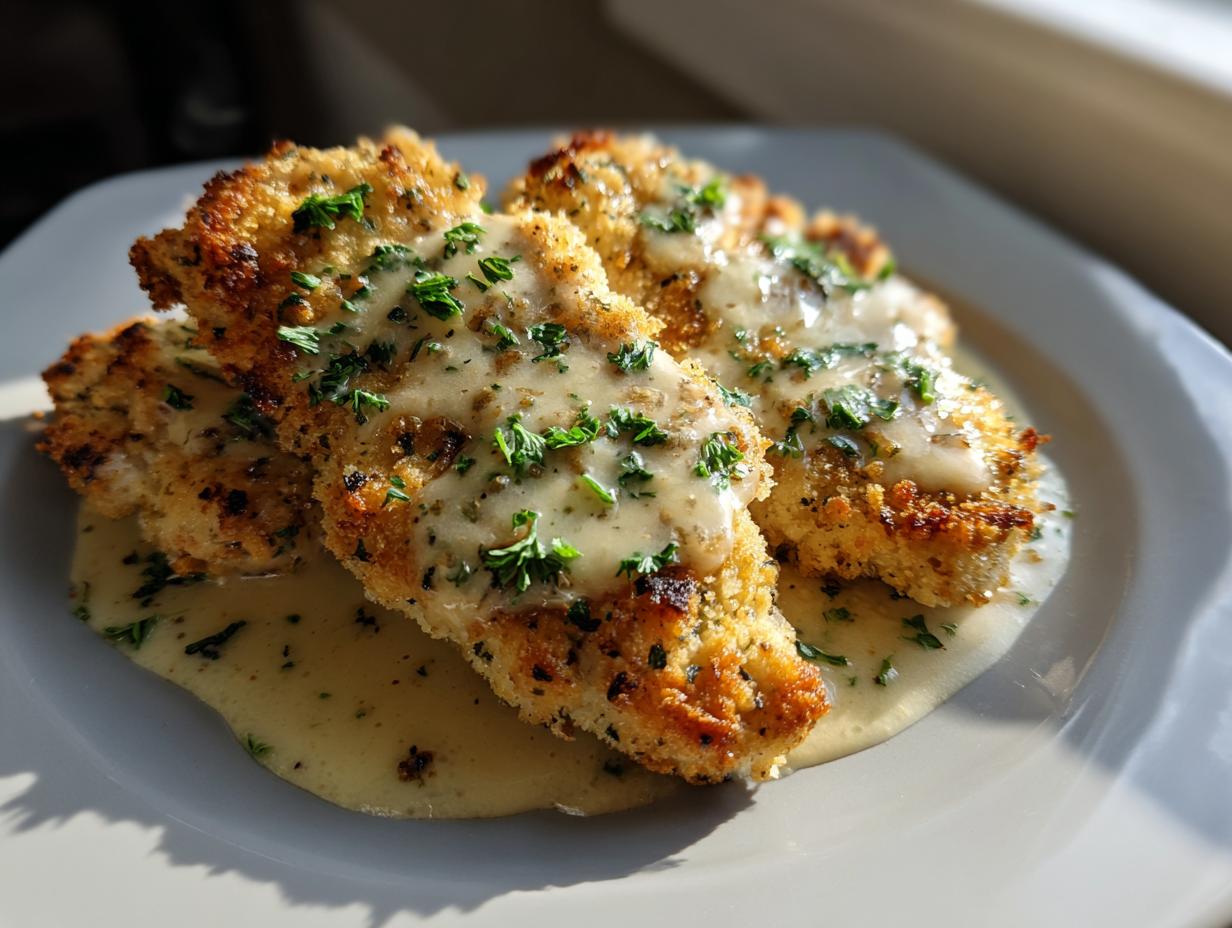
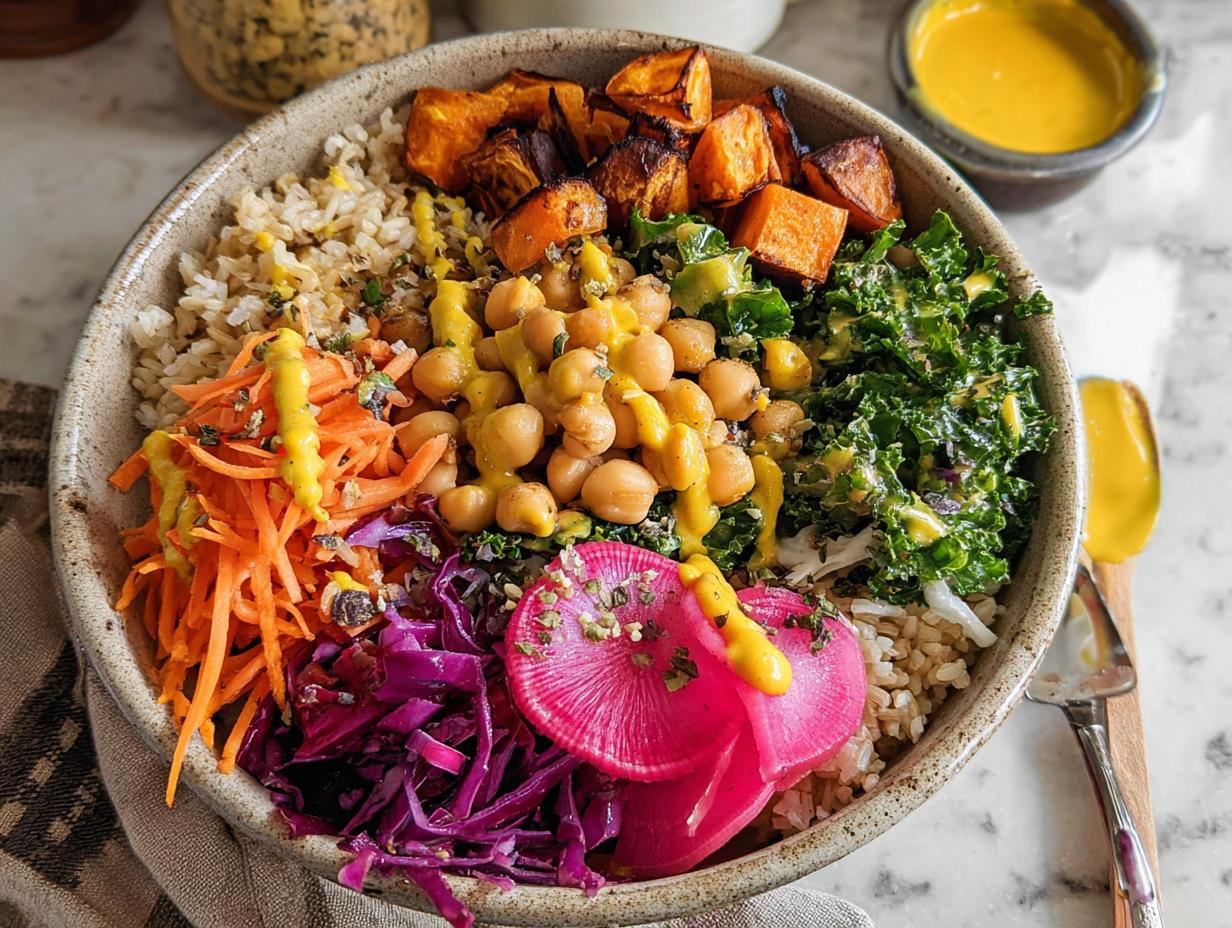
You know, there’s just something magical about a perfectly assembled rice bowl. It’s like a little edible world in a dish, bursting with flavor, color, and texture. And guess what? Making those gorgeous, restaurant-worthy rice bowls at home is totally doable! Seriously, if you’ve ever looked at a beautifully plated rice bowl and thought, “I could never do that,” think again! I’m Maya Patel, and I’m so excited to show you How to Make Rice Bowls Recipes Like a Pro (2025). Growing up in a second-generation Indian-American household, rice bowls were our weekly jam, and each one told a story of my family’s culinary journey. I vividly remember the thrill of digging through leftover veggies and spices, transforming them into these vibrant bowls that my family absolutely adored. I even had a wild idea one night to fuse Indian curry with traditional wrap techniques for a rice bowl – my friends went nuts for it! That spark ignited my passion for food, and now, as a nutrition counselor and recipe creator, I want to share that same connection and celebration with you, right in your own kitchen.
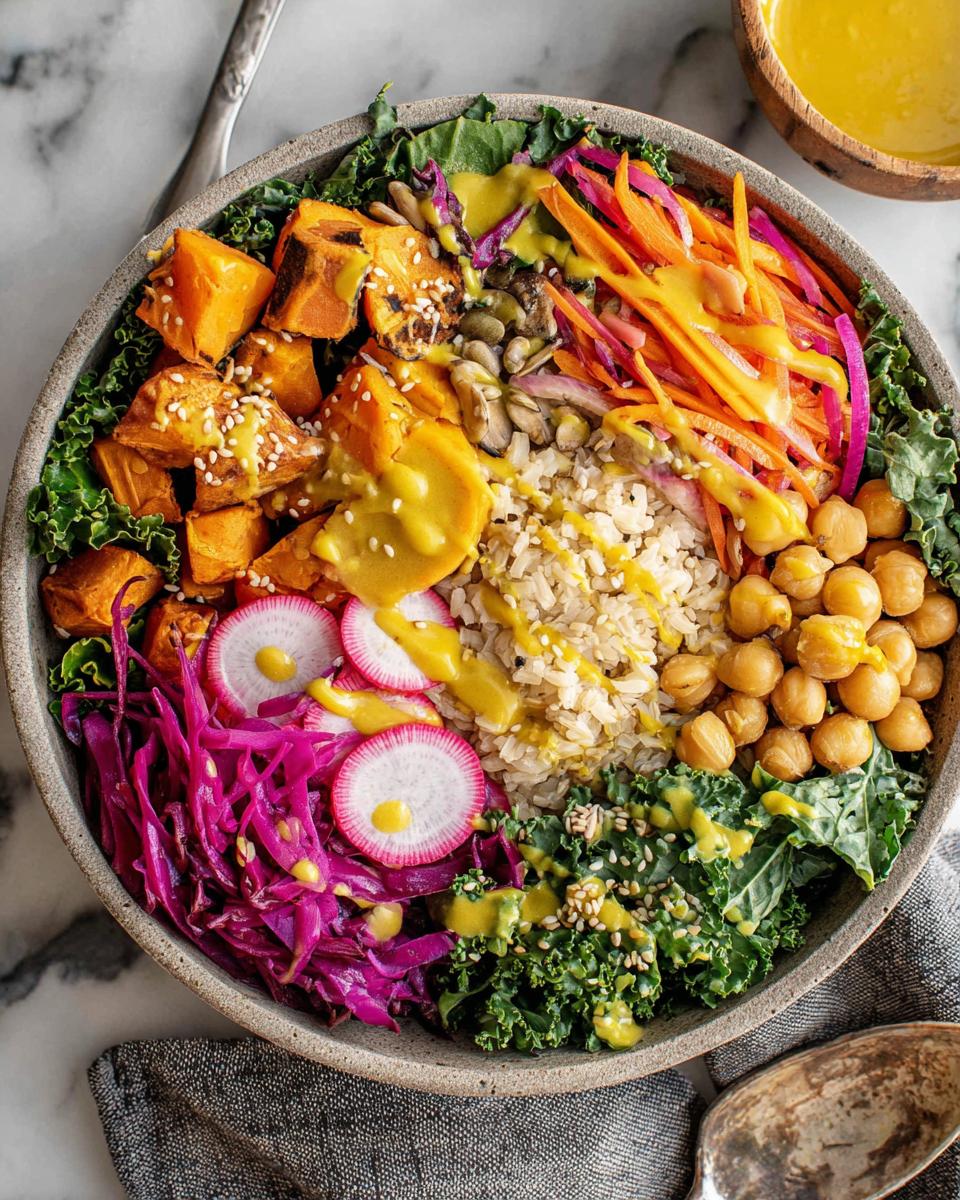
Why You’ll Love This Vegan Buddha Bowl Recipe
This Vegan Buddha Bowl isn’t just pretty; it’s seriously good for you AND tastes amazing!
- Super Healthy: Packed with nutrients from all those colorful veggies and wholesome grains.
- Flavor Fiesta: The creamy turmeric tahini sauce is a total game-changer!
- Easy Peasy: Perfect for weeknights or meal prepping ahead of time.
- Totally Customizable: Swap out any ingredient for your favorites – it’s your bowl after all!
Mastering the Art: How to Make Rice Bowls Recipes Like a Pro (2025)
Alright, let’s get down to business on How to Make Rice Bowls Recipes Like a Pro (2025)! It’s all about balance, really. Think about hitting all the right notes: sweet, savory, tangy, maybe a little spicy? And don’t forget textures – you want that satisfying chew from the grains, a bit of crunch from veggies, creaminess from a sauce, and maybe some tenderness from your protein. Color is huge too; a vibrant bowl just tastes better, doesn’t it? It’s like painting a delicious picture! The secret is putting it all together thoughtfully, layer by layer. I’ve learned that starting with the right base, adding a stellar protein, filling it with gorgeous veggies, and then tying it all together with a killer sauce is the golden ticket. Trust me, once you get the hang of this, your rice bowl game will be unstoppable. Check out Love and Lemons’ rice bowl recipes for more inspiration!
Choosing Your Perfect Base
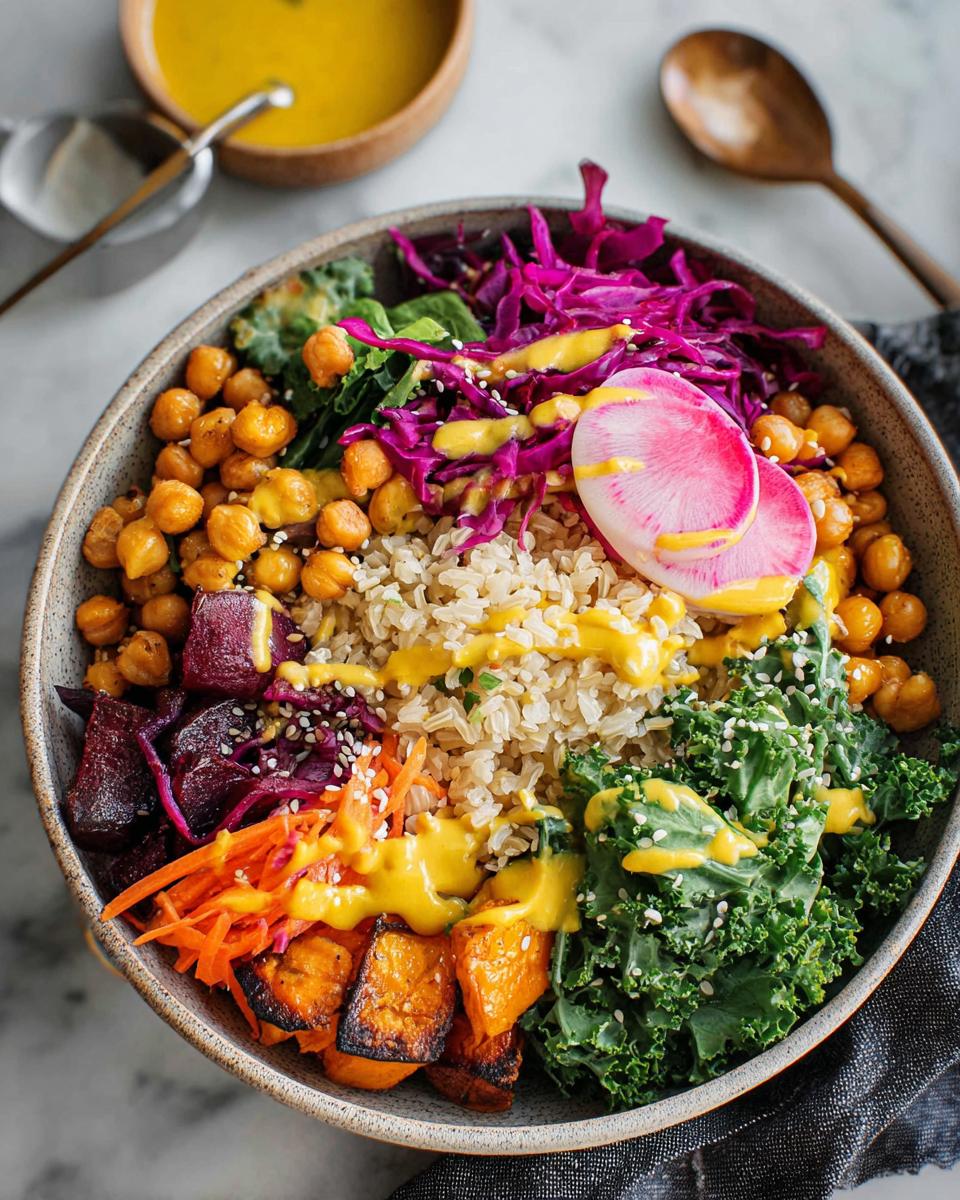
Your base is like the stage for your entire production! Brown rice is a classic for a reason – hearty and nutty. But don’t stop there! Quinoa adds a lovely protein punch and a satisfying bite. Farro has this wonderful chewy texture that I just adore. Even something like cauliflower rice keeps it light and low-carb. The key is picking a grain that you love and that complements your other toppings. Picking the right foundation makes all the difference. You can even try something as simple as perfectly cooked oats sometimes for a breakfast bowl!
Protein Power: The Heart of Your Rice Bowl
This is where you bring in the serious flavor! For my vegan friends, perfectly roasted chickpeas, seasoned tofu, or tempeh are fantastic. They get nice and crispy in the oven! If you’re an omnivore, grilled chicken, salmon, or even some quick-seared steak work wonders. Marinate your protein beforehand for an extra flavor boost, and don’t be afraid to experiment with different seasonings. A little bit of love in the prep goes a long way to making your bowl sing!
Vibrant Veggies and Toppings
This is where the magic really happens for color and nutrients! I love a mix of cooked and raw. Roasting veggies like sweet potatoes or broccoli brings out their natural sweetness and gives them a lovely texture. Steamed edamame or asparagus are super quick and add a nice crunch. And don’t forget the raw stuff – thinly sliced radishes, shredded carrots, or crisp red cabbage add beautiful color and a refreshing bite. Even a simple spinach salad or some crunchy sprouts can really elevate a bowl. It’s all about texture and visual appeal!
The Ultimate Vegan Buddha Bowl: A Step-by-Step Guide
Now for the fun part – putting it all together! This is where you get to really play chef and create a gorgeous bowl of deliciousness. I’m going to walk you through how to make our Vegan Buddha Bowl, and trust me, it’s simpler than it looks. You’ll be amazed at what you can whip up, bringing you one step closer to How to Make Rice Bowls Recipes Like a Pro (2025)!
Preparing the Roasted Sweet Potatoes
First things first, let’s get those sweet potatoes cooking! Preheat your oven to 400°F (200°C). Chop up your sweet potato into bite-sized cubes – nice and even so they cook uniformly. Toss them on a baking sheet with a little drizzle of oil, a pinch of salt, and a grind of pepper. Spread them out so they can get nice and caramelized. Roast them for about 25 to 30 minutes, or until they’re fork-tender and you see those lovely browned edges. That caramelization is pure flavor!
Whipping Up the Turmeric Tahini Sauce
While those potatoes are doing their thing, let’s make the star sauce! In a small bowl, whisk together your tahini, a splash of water (you might need more, just keep adding a teaspoon at a time until it’s smooth and creamy), fresh lemon juice for brightness, that gorgeous turmeric for color and flavor, a little garlic powder, and some salt. Whisk it all up until it’s super smooth and drizzle-able. If it’s too thick, just add a tiny bit more water. This sauce is seriously addictive!
Assembling Your Perfect Rice Bowl
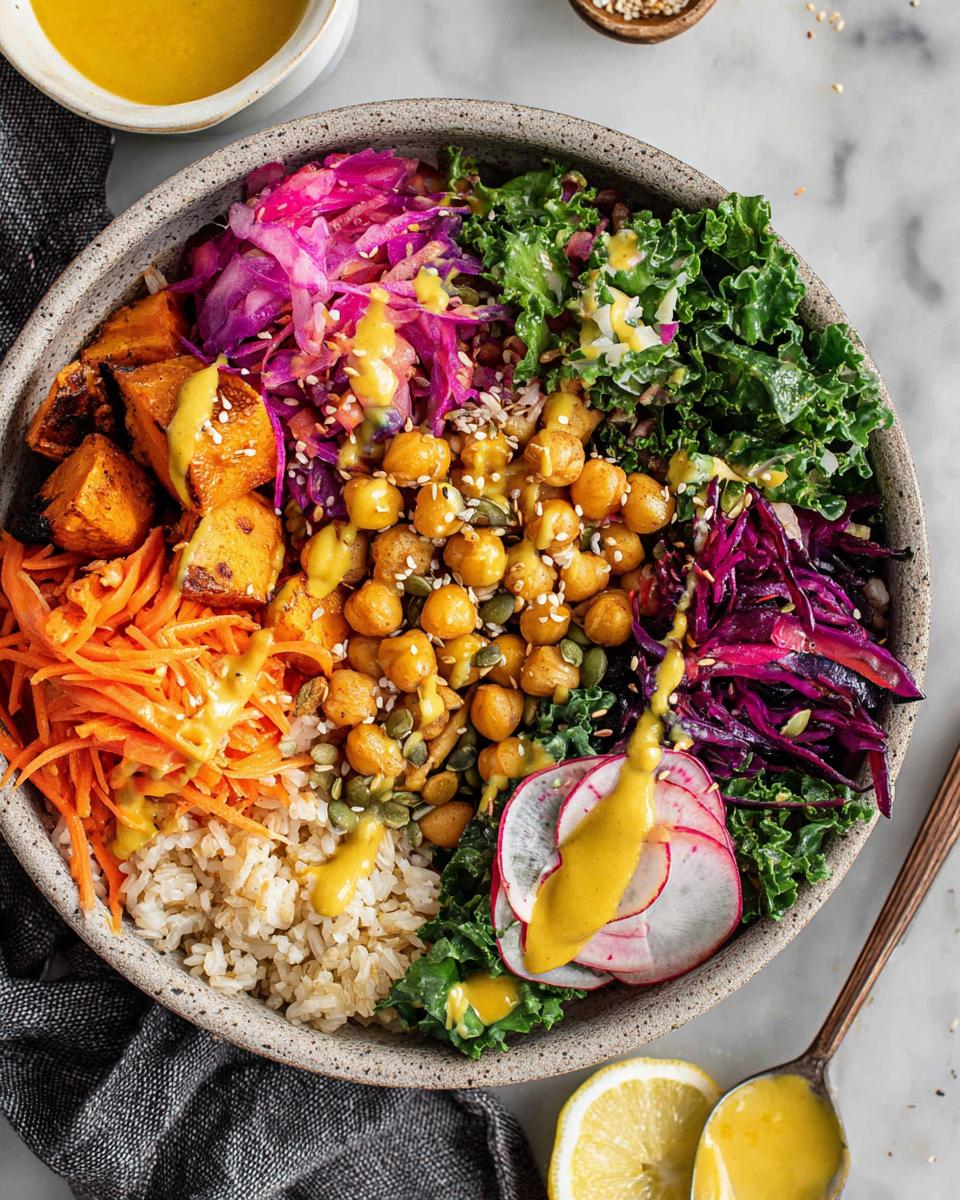
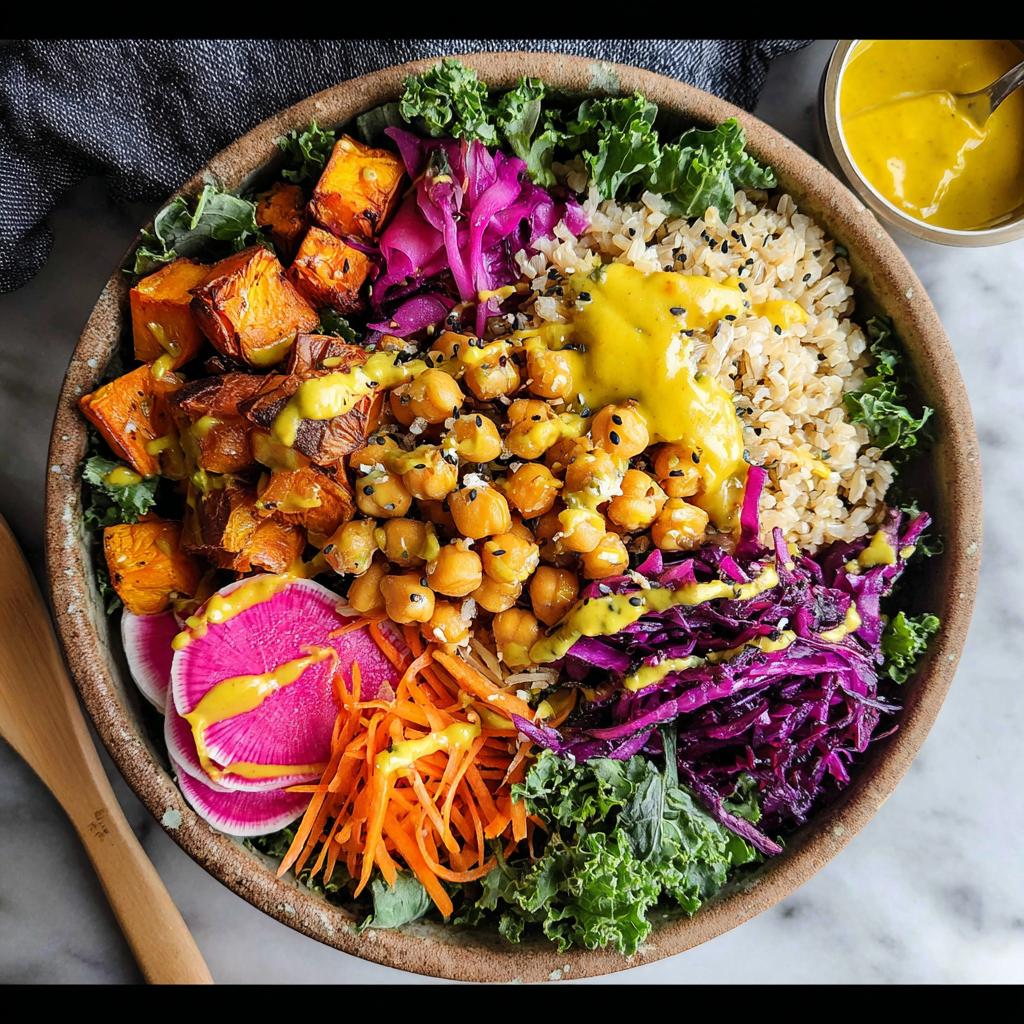
Okay, it’s time to build your masterpiece! Grab four bowls and start with a nice base of your cooked brown rice – or whatever grain you chose. Then, artfully arrange your toppings: nestle in those roasted sweet potatoes, pile on some fresh chopped kale, scatter on those rinsed chickpeas, add the vibrant watermelon radish, crunchy rainbow carrots, shredded red cabbage, and a little dollop of sauerkraut for that probiotic punch. Finally, give it all a generous drizzle of that sunshine-yellow turmeric tahini sauce. Doesn’t it just look amazing?
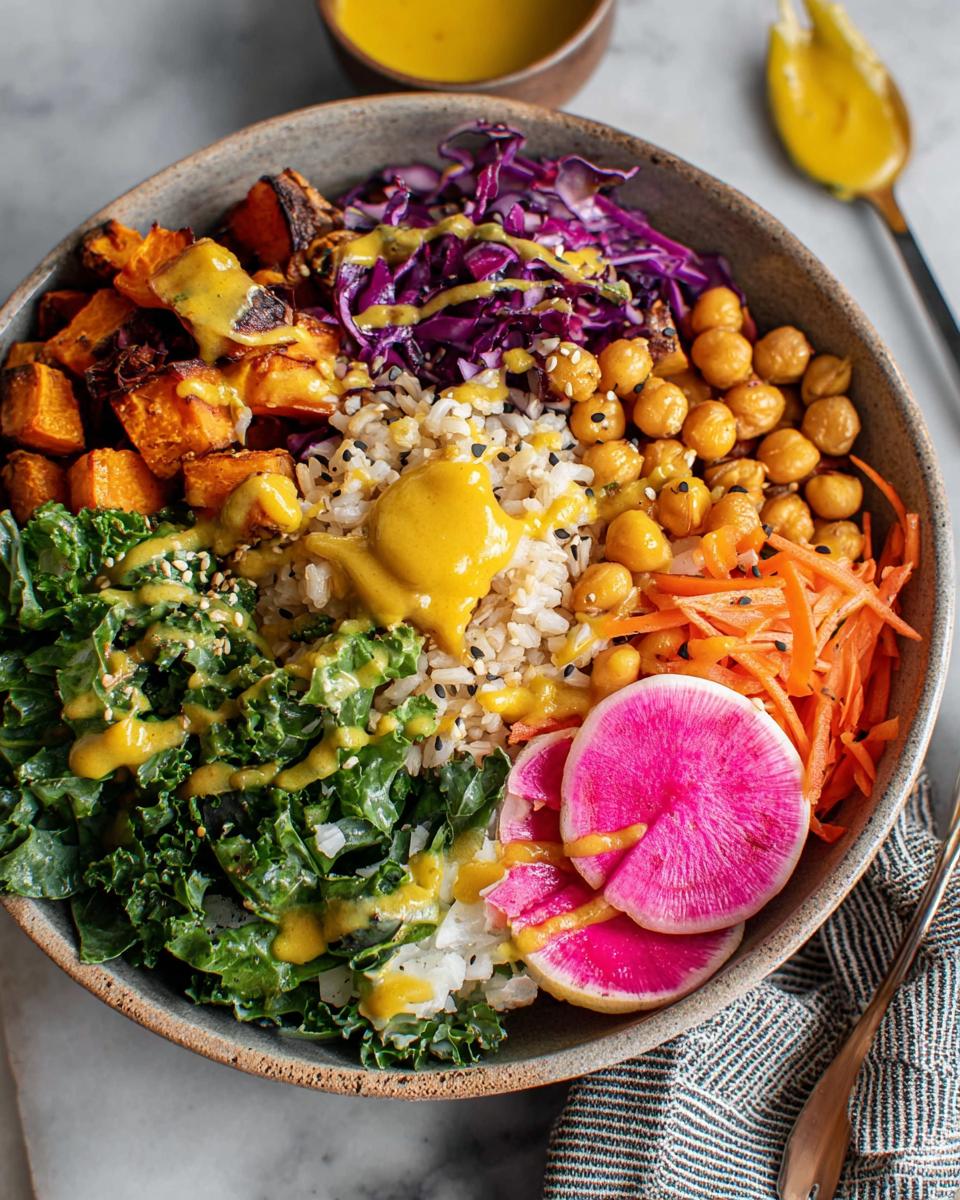
Ingredient Notes and Substitutions for Your Rice Bowl Recipes
Alright, let’s talk ingredients! Sometimes you might not have exactly what the recipe calls for, or you might have a dietary need. That’s totally okay – that’s part of How to Make Rice Bowls Recipes Like a Pro (2025)! For the Turmeric Tahini Sauce, if you’re out of lemon juice, a splash of apple cider vinegar can work in a pinch, though it’ll give a slightly different tang. Water is usually fine for thinning, but a little bit of unsweetened plant milk can add extra creaminess. If you can’t find watermelon radish, any thinly sliced radish or even some cucumber will add that crisp bite. And don’t stress if rainbow carrots aren’t available; regular carrots are just as delicious! For a different spin, you could even try a vibrant banana salad on the side or incorporated if you’re feeling adventurous!
Tips for Success: Elevating Your Rice Bowl Game
Want to truly level up your rice bowl game? Here are a few little tricks I’ve picked up that really make a difference. Prepping components ahead of time is a lifesaver for busy weeks – roast those veggies and make your sauce on Sunday, and assembly is a breeze! Also, practice your knife skills a bit; uniformly cut veggies don’t just look pretty, they cook more evenly. Don’t be afraid to play with flavor pairings! Think about adding a little something acidic like pickled onions, or some heat with chili flakes. It’s these little touches that turn a good bowl into a great one. Check out these wheat pancake tips for some unexpected inspiration on textures!
Frequently Asked Questions About How to Make Rice Bowls Recipes Like a Pro (2025)
Got questions about creating those amazing rice bowls? I’ve got answers! Let’s dive into how to make rice bowls recipes like a pro (2025)!
Can I prepare rice bowl components ahead of time for meal prep?
Absolutely, yes! This is the *best* way to make meal prep a breeze. The recipe notes already tell you the sauce keeps for a week. For other components, store cooked grains, roasted veggies, and proteins in separate airtight containers in the fridge. Keep crunchy raw veggies separate until just before serving to keep them crisp! If you ever need to reach out, our contact page has all the info!
What are some other healthy grain options for rice bowls?
Oh, so many! Besides brown rice, try quinoa – it’s a complete protein. Farro is wonderful for its chewy texture. Even simpler grains like millet or bulgur work beautifully. For something lighter, cooked oats can be surprisingly good in a savory bowl!
How can I make my rice bowls more visually appealing?
It’s all about that arrangement! Think about placing your colorful ingredients in sections rather than just dumping them all together. Contrast your colors – bright greens next to deep purples, for example. A final sprinkle of fresh herbs like cilantro or parsley, or even some toasted sesame seeds, can really make your bowl pop!
Storage and Reheating Instructions
Got leftovers? Lucky you! For the best taste, store your rice bowl components separately in airtight containers in the fridge. This keeps everything fresh and prevents sogginess. When you’re ready to dive back in, you can reheat the cooked grains, roasted veggies, and protein gently in the microwave or on the stovetop. For the freshest experience, add your raw veggies and sauce right before serving. It’s super simple and keeps your bowl tasting just as good as the first time!
Estimated Nutritional Information
Keep in mind these are just estimates and can vary based on the exact ingredients and portion sizes you use! For this Vegan Buddha Bowl, you’re looking at roughly 450-550 calories per serving, with a good balance of protein, healthy fats, complex carbs, and fiber. It’s a wholesome meal designed to keep you satisfied!
Share Your Creations!
I would absolutely LOVE to see what amazing rice bowls you whip up! Did you try the Vegan Buddha Bowl, or did you create your own masterpiece? Snap a pic and tag me on social media, or leave a comment below telling me all about it. Your culinary adventures inspire me, and I can’t wait to get inspired by you! If you’re curious about who else contributes amazing content, check out our About Us page!
Vegan Buddha Bowl
Ingredients
Equipment
Method
- Preheat your oven to 400°F (200°C). Toss the cubed sweet potato with a little oil, salt, and pepper, and spread on a baking sheet. Roast for 25-30 minutes, or until tender and slightly caramelized.
- While the sweet potatoes are roasting, prepare the turmeric tahini sauce. In a small bowl, whisk together tahini, water, lemon juice, turmeric, garlic powder, and salt until smooth and creamy. Add more water, a teaspoon at a time, if needed to reach your desired consistency.
- Assemble your buddha bowls. Divide the cooked brown rice among four bowls. Top with the roasted sweet potatoes, chopped kale, chickpeas, watermelon radish, rainbow carrots, red cabbage, and sauerkraut.
- Drizzle generously with the turmeric tahini sauce before serving.
Notes
Tried this recipe?
Let us know how it was!
Maya Patel, Community Manager & Adaptation Specialist
I’ve spent the past five years working in community-focused nutrition, passionate about making low-carb eating accessible to everyone regardless of cultural background. With certification in cross-cultural nutrition counseling, I help people adapt healthy eating approaches while preserving their cherished food traditions.
My journey began as a community outreach coordinator when I noticed how nutrition advice often ignored people’s cultural food practices. This frustrated me—why should someone abandon their grandmother’s recipes to be healthy? I started developing ways to adapt traditional dishes from different cultures to fit therapeutic nutrition goals, helping hundreds of families integrate low-carb principles without losing their culinary heritage.
As a second-generation Indian-American, this is deeply personal. I’ve balanced my family’s food traditions with modern nutrition research, especially when adopting a low-carb approach to manage my PCOS. That experience taught me that sustainable health changes must honor who you are and where you come from.
My “inclusive wellness” philosophy is straightforward: there’s no one-size-fits-all approach to healthy eating. Whether developing vegetarian keto adaptations for traditional Indian flavors or creating community spaces for sharing cultural recipe modifications, I believe everyone deserves respect and support in their wellness journey.
When I’m not facilitating online discussions or testing cultural adaptations in my Portland kitchen, I work with clay in my pottery studio or volunteer with local community gardens. I believe growing food together strengthens both community bonds and our connection to nourishing ingredients.
At Low Carb Recipe Journal, I ensure our community remains welcoming for readers from all backgrounds while developing practical ways to adapt recipes for different cultural preferences and dietary needs. My goal is making low-carb eating culturally celebratory, not restrictive.